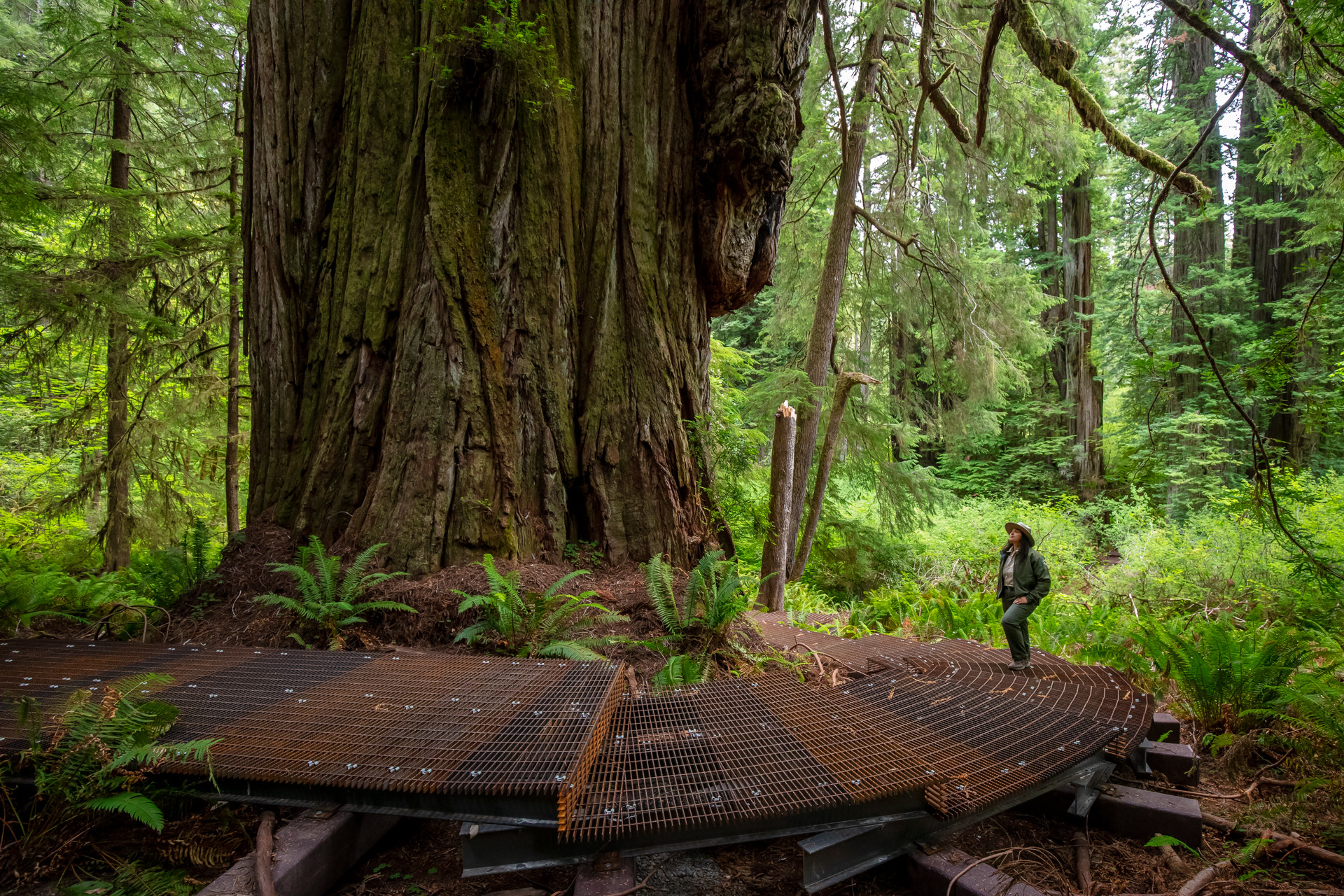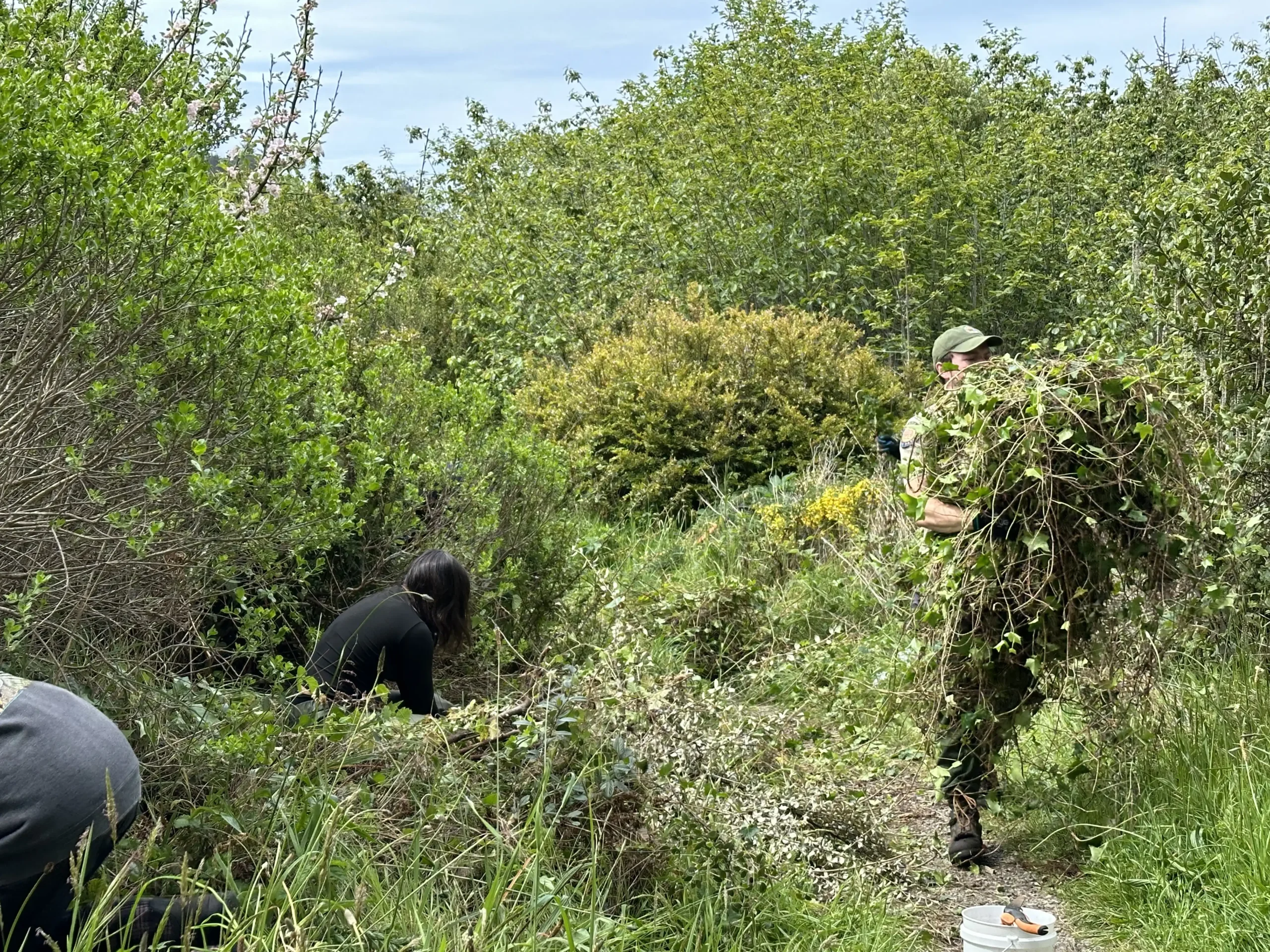
English ivy is one of the non-native plants that will be addressed at Trinidad State Beach. Photo courtesy of California State Parks.
Caring for Northern California’s public lands is a big job. The parks encompass thousands of acres, from old-growth redwood forests to coastal dunes, beaches, grasslands and rivers. California State Parks has knowledgeable natural resource staff working across these landscapes, but the scale of the work means additional hands are essential.
That is why Redwood Parks Conservancy brings community members together with California State Parks for hands-on restoration projects throughout the year.
These volunteer workdays give people a direct role in caring for the public lands they know and love while helping park staff accomplish more restoration work across the North Coast.
Restoring the coast, one plant at a time
Coastal dune habitat is highly degraded in many areas due to invasive plants and other impacts. Invasive species can crowd out native plants, alter dune morphology and affect the wildlife that depends on these habitats.
Healthy dune systems also provide an important natural barrier along the coast, helping protect communities, wildlife habitat and cultural sites from erosion, flooding and rising sea levels. Restoring these habitats is an important part of maintaining the resilience of our coastal environments and communities for generations to come.
In September, volunteers will have several opportunities to help with this work.
Little River State Beach | September 12
At Little River State Beach, volunteers will help remove European beachgrass, an invasive species that has significantly altered coastal dune habitat.
European beachgrass has displaced sensitive native plants such as pink sand verbena and American silvertop. It has also negatively affected two federally threatened species, beach layia and the western snowy plover.
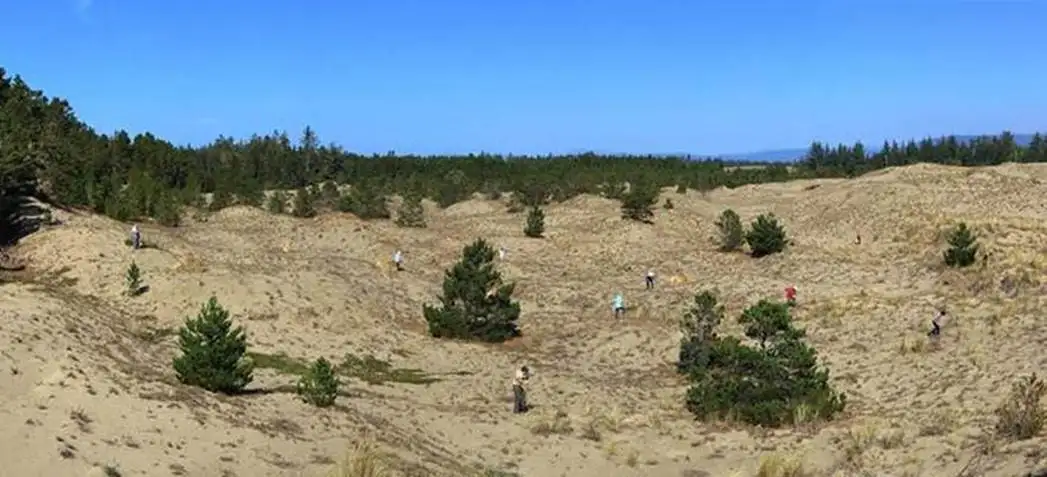
Big Dune restoration at Tolowa Dunes State Park. Photos courtesy Tolowa Dunes Stewards.
Big Dune, Tolowa Dunes State Park | September 20
At Big Dune, volunteers will also help remove European beachgrass. Multiple sensitive plant species have been negatively affected by its spread, including the federally threatened silvery phacelia.
The impacts seen at Big Dune are similar to those at Little River State Beach, where European beachgrass has changed coastal dune habitat and displaced native species.
Removing invasive plants creates space for native species to grow and helps restore the ecological functions of these coastal habitats.
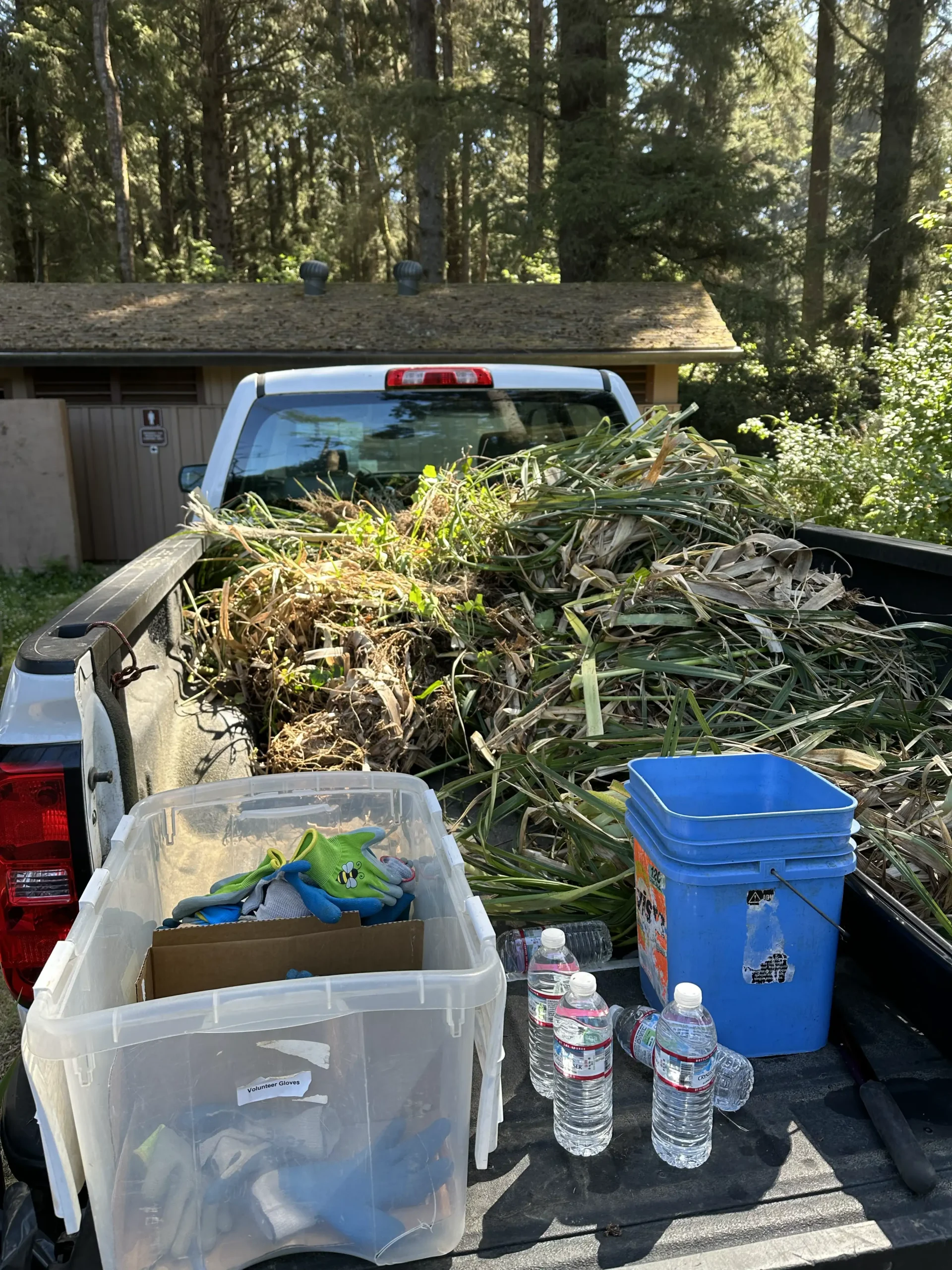
Truckload of invasive Pampas grass being hauled out from Sue-meg State Park. Photo courtesy RPC.
Pulling Together at Trinidad State Beach
On September 26, volunteers will gather for the third annual Pulling Together Trinidad event at Trinidad State Beach.
The project will focus on removing invasive non-native plants including English ivy, cotoneaster, heather and Scotch broom. These species have been encroaching into coastal bluff and forest habitats, crowding out native plants and reducing wildlife habitat and available forage.
English ivy is particularly persistent. Introduced to Trinidad State Beach many decades ago, it now carpets roughly a quarter of the forest floor. The dense growth prevents native plant species from growing and reproducing.
English ivy can also climb the trunks and limbs of trees in search of sunlight. Once the vines reach the canopy, they can flower and produce berries that birds feed on. Those birds can then spread the seeds to new locations, allowing infestations to begin miles away.
Removing English ivy will make more room for native plants that provide food and habitat for native birds and other species.
The impacts of invasive plants at Trinidad extend beyond the forest. Non-native species have transformed a coastal grassland bluff into an invasive shrub community, reducing available forage and habitat for grassland species. Some of these plants also pose a greater risk of hard-to-control wildfires than the native species they have replaced.
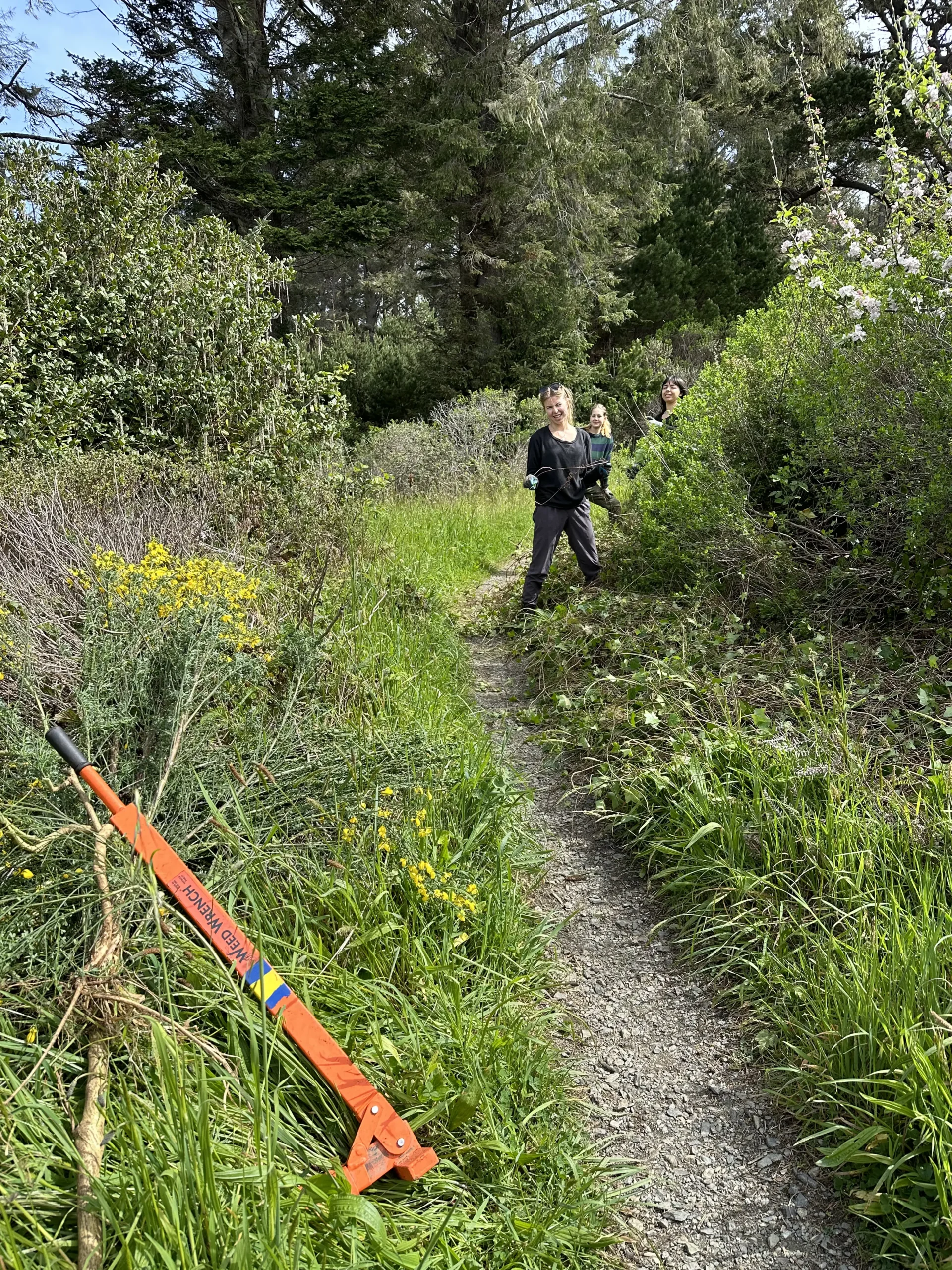
Volunteering is a vital way to care for our public lands. Photo courtesy of California State Parks.
Anyone can volunteer
No previous restoration experience is necessary to participate in these workdays.
Before work begins, California State Parks staff provide instructions on tool use and safety, explain which plants are being targeted and show volunteers how to avoid disturbing native species. Tools and gloves are provided.
Volunteers should wear sturdy shoes, bring drinking water and a hat, and be prepared for moderate physical activity. The events are free and open to volunteers of all ages, although minors must be accompanied by a parent or legal guardian.
A great volunteer is simply someone who is willing to learn, follow the guidance of park staff, work safely as part of a team and bring a positive attitude. You do not have to be an expert or exceptionally strong to make a meaningful contribution. There are generally ways for people with different experience and comfort levels to participate.
Stewardship in action
The value of these workdays goes beyond the acres restored or invasive plants removed.
They also give people an opportunity to better understand the ecosystems around them and take an active role in their care. Bringing people onto the land to work alongside park staff helps turn an abstract idea of conservation into hands-on stewardship.
The North Coast has an incredible community of conservation-minded people who continue to show up and give back to the public lands they love. Their time and effort make it possible to accomplish restoration work that would otherwise be difficult to undertake at the same scale.
Supporting restoration across the North Coast
Volunteer restoration events are one part of Redwood Parks Conservancy’s broader work supporting Northern California’s public lands.
Redwood Parks Conservancy is a nonprofit organization whose mission is to foster understanding, enjoyment and stewardship of Northern California’s public lands by providing support to the National Park Service, California State Parks, the U.S. Forest Service and Bureau of Land Management, the public agencies entrusted with caring for these extraordinary places.
That support takes many forms, including visitor services, educational and interpretive programs, habitat restoration, trail and park improvements, youth programs and volunteer opportunities such as these natural resource workdays.
Volunteer restoration opportunities are offered throughout the year, with locations and projects rotating based on seasonal conditions, restoration priorities, weather and the needs of park staff.
There are many ways to support Redwood Parks Conservancy’s work: make a gift, shop at our visitor center park stores, volunteer your time or help spread the word.
Explore the projects your support makes possible at redwoodparksconservancy.org/our-projects.
Thank you for helping care for these special places through hands-on stewardship.
Redwood Parks Conservancy is a tax-exempt organization on a mission to support your parks and public lands. Together we can do it; donate today: https://redwoodparksconservancy.org/donate-rpc.